
Alhambra Granada: Complete Visitor Guide
The Alhambra in Granada is one of the most extraordinary historic landmarks in Spain. Rising above the city against the backdrop of the Sierra Nevada mountains, this magnificent palace and fortress complex combines centuries of Islamic architecture, royal history, peaceful gardens and breathtaking views. From the intricate decoration of the Nasrid Palaces to the defensive towers of the Alcazaba and the fountains of the Generalife, every part of the Alhambra reveals a different side of Granada’s fascinating past.
Alhambra tickets & tours
Visiting the Alhambra requires more planning than many other attractions in Andalusia. Tickets can sell out well in advance, the Nasrid Palaces have a strict entry time, and the entire complex is considerably larger than it first appears. Choosing the right ticket, understanding the different entrances and allowing enough time will make your experience much more enjoyable. This complete Alhambra Granada guide covers everything you need to know, including what to see, tickets, opening hours, walking routes, accessibility, photography, accommodation and nearby attractions.
Alhambra at a Glance
Location
Sabika Hill, Granada, Andalusia, Spain
Recommended visit duration
3–4 hours; 4–5 hours for a relaxed visit
Main highlights
Nasrid Palaces, Alcazaba, Generalife, Partal and Palace of Charles V
Tickets
Advance booking strongly recommended
Nasrid Palaces
Timed entry required
Best time to visit
Early morning or late afternoon, depending on season
Table of Content
- Is the Alhambra Worth Visiting?
- What Can You See Inside the Alhambra?
- Alhambra Tickets: Which Ticket Should You Choose?
- Alhambra Opening Hours
- Best Time to Visit the Alhambra
- How Long Does It Take to Visit the Alhambra?
- How to Plan Your Alhambra Walking Route
- How to Get to the Alhambra in Granada
- Which Alhambra Entrance Should You Use?
- Visiting the Alhambra with Children
- Visiting the Alhambra with Seniors
- Alhambra for Photography Lovers
- What to Wear and Bring to the Alhambra
- Where to Stay Near the Alhambra
- What to See Near the Alhambra
- A Brief History of the Alhambra
- Suggested Granada Itineraries Including the Alhambra
- Frequently Asked Questions About the Alhambra
- Final Tips for Visiting the Alhambra
Is the Alhambra Worth Visiting?
Yes, the Alhambra is absolutely worth visiting, even if you only have a short time in Granada. Few historic attractions in Europe combine architecture, landscape, gardens and cultural history as successfully. The complex is not simply one palace but an entire fortified royal city, with defensive structures, ceremonial rooms, residential spaces and landscaped gardens spread across a large hilltop site.
What makes the Alhambra especially memorable is the contrast between its different areas. The Alcazaba feels imposing and military, while the Nasrid Palaces are intimate and richly decorated. The Generalife offers peaceful gardens and water features, whereas the Palace of Charles V introduces a completely different architectural period. Together, these monuments reveal how Granada developed under Muslim and Christian rule.
Alhambra tickets & tours
However, the Alhambra is not an attraction to rush through. Distances between the main sights are significant, and some of the most impressive details are found in ceilings, inscriptions, archways and courtyards. Visitors who allow enough time to appreciate these features usually have a much more rewarding experience than those trying to see everything in two hours.
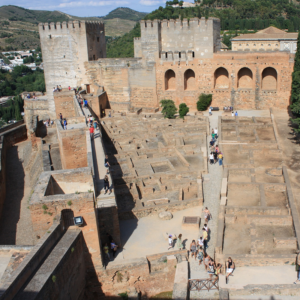
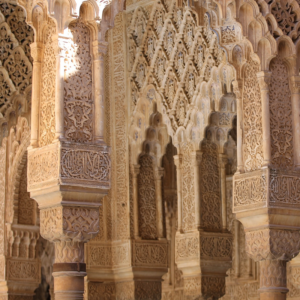
Impression of the Alhambra
What Can You See Inside the Alhambra?
The Alhambra contains several distinct areas, each with its own history and atmosphere. The most important are the Nasrid Palaces, the Alcazaba, the Generalife, the Palace of Charles V and the Partal. There are also historic gates, gardens, archaeological remains and quieter pathways connecting the principal monuments.
The Nasrid Palaces
The Nasrid Palaces are the artistic heart of the Alhambra and, for many visitors, the main reason to come. Built and expanded by successive Nasrid rulers, these interconnected palaces demonstrate the sophistication of medieval Granada. Their decoration combines geometric patterns, Arabic calligraphy, carved stucco, glazed tiles, wooden ceilings and carefully arranged water features.
Rather than relying on monumental façades, the Nasrid architects created spaces that gradually reveal their beauty. A relatively simple passage may lead into a courtyard surrounded by delicate arches, while a modest doorway can open onto an extraordinarily decorated hall. Light, reflection, proportion and water are essential elements of the experience.
The Mexuar
The Mexuar is traditionally associated with administrative and judicial functions, although the area underwent several modifications over the centuries. Its architectural layers reflect the changing uses of the Alhambra after the Christian conquest. Look closely at the decorative tilework, carved surfaces and the relationship between the interior rooms and adjoining courtyards.
The Mexuar provides an interesting introduction to the Nasrid Palaces because it illustrates how political authority was expressed through architecture. Its relatively restrained appearance also prepares visitors for the increasingly elaborate spaces that follow.
Comares Palace and the Court of the Myrtles
The Court of the Myrtles is one of the most recognizable spaces in the Alhambra. Its long rectangular reflecting pool mirrors the surrounding architecture and the imposing Comares Tower, creating an almost perfectly symmetrical composition. The still water makes the courtyard feel remarkably calm, despite the number of visitors passing through.
Inside the Comares Tower is the Hall of the Ambassadors, an important ceremonial room associated with the Nasrid court. Its elaborate wooden ceiling and decorated walls demonstrate the political and artistic ambition of Granada’s rulers. The room is particularly impressive when you consider how carefully every surface contributes to the overall design.
The Palace of the Lions
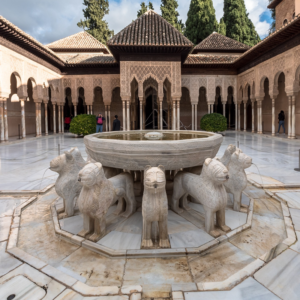
The Palace of the Lions is among the finest examples of Nasrid architecture. Its famous courtyard is surrounded by slender marble columns and delicate arches, creating an unusually light and elegant appearance. At the center stands the Fountain of the Lions, supported by twelve carved marble lions.
The surrounding rooms are equally remarkable. The Hall of the Abencerrajes and the Hall of the Two Sisters feature extraordinary muqarnas vaulting, with intricate three-dimensional forms that resemble hanging honeycombs. These ceilings are among the details most worth studying slowly, rather than simply photographing and moving on.
Why the Nasrid Palaces Are So Special
The beauty of the Nasrid Palaces lies not only in their decoration but also in how the different spaces interact. Courtyards provide light and ventilation, water introduces movement and reflection, and carefully positioned openings frame views of gardens or distant landscapes. The result is architecture that feels both intimate and monumental.
Arabic inscriptions appear throughout the palaces, often combining poetry, religious expressions and references to royal authority. These decorative elements form part of a larger artistic system in which writing, geometry and architecture work together. Even visitors unfamiliar with Islamic art can appreciate the extraordinary precision and craftsmanship.
The Alcazaba Fortress
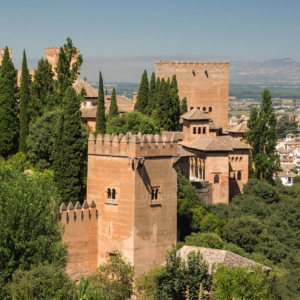
The Alcazaba is the oldest major surviving military area of the Alhambra and occupies a strategic position overlooking Granada. Its towers, walls and defensive layout reveal the fortress’s original purpose: controlling access to the hill and protecting the royal settlement. The atmosphere here is noticeably different from the richly decorated Nasrid Palaces.
One of the main attractions is the Torre de la Vela, or Watchtower, which offers sweeping views across Granada, the Albaicín and the surrounding landscape. From the elevated viewpoints, you can better understand why the hill was such an important defensive location. The fortress also contains remains of military structures and spaces associated with the people who once lived and worked inside its walls.
The Alcazaba is particularly enjoyable for visitors interested in medieval fortifications and photography. However, its exposed position means there is relatively little shade, and some areas involve steep steps and uneven surfaces. During hot weather, consider exploring the fortress earlier in the day.
Torre de la Vela and the Best Viewpoints
The Torre de la Vela is one of the most recognizable towers of the Alhambra. From its elevated position, visitors can enjoy panoramic views of Granada, the surrounding countryside and the mountains beyond. The rooftops of the Albaicín are particularly impressive from this perspective.
The tower also has historical significance beyond its defensive role. Its bell became associated with important civic traditions in Granada, while its prominent position made it a symbol of the fortress. For many visitors, climbing to the viewpoint is one of the highlights of the Alcazaba.
What to Look for Inside the Alcazaba
Beyond the famous viewpoints, the Alcazaba contains the remains of military quarters, defensive walls and internal spaces that once supported the fortress. These structures help visitors imagine how soldiers lived and operated within the fortified complex. The layout also demonstrates the importance of controlling movement through the different defensive areas.
Allow time to explore the smaller corners rather than heading directly to the highest tower. The contrast between the surviving walls and the surrounding city makes the Alcazaba particularly atmospheric. It also provides an excellent introduction to the Alhambra’s origins as a defensive stronghold.
The Generalife Palace and Gardens
The Generalife was the recreational estate of Granada’s Nasrid rulers, providing a quieter setting away from the more formal royal spaces of the Alhambra. Today, its gardens, courtyards, pathways and water channels offer a refreshing contrast to the enclosed interiors of the palaces. The surrounding landscape is an important part of its appeal.
The Patio de la Acequia, or Court of the Water Channel, is the Generalife’s most famous feature. A long water channel runs through the courtyard, surrounded by vegetation and architectural elements that create a sense of balance and tranquility. Although the gardens have changed over time, water remains central to the experience.
The Generalife is especially attractive in spring, when many plants are flowering, and in early autumn, when temperatures can be more comfortable for walking. Summer offers lush greenery but can also bring intense heat. Even outside the main flowering seasons, the combination of architecture, fountains and views makes the gardens worth visiting.
Patio de la Acequia
The Patio de la Acequia is one of the most beautiful garden courtyards in Spain. Its long central water channel creates a strong visual axis, while fountains and surrounding vegetation add movement and texture. The courtyard demonstrates how water could be used to create both practical cooling effects and a sense of refined luxury.
The arrangement of the garden encourages visitors to look along the water channel toward the surrounding architecture. Small details, including the relationship between planted areas and built structures, reveal the careful design of the space. It is worth pausing here to appreciate the overall composition rather than concentrating only on individual features.
Patio de los Cipreses
The Patio de los Cipreses, also known as the Courtyard of the Sultana, is another distinctive part of the Generalife. Its water features, vegetation and enclosed atmosphere create a different experience from the more formal Patio de la Acequia. The courtyard has also become associated with stories and legends connected to the Nasrid court.
Although the historical accuracy of these stories is uncertain, they contribute to the romantic image of the Generalife. The courtyard itself is worth visiting for its peaceful setting and architectural character. It is another reminder that the Generalife was designed as a place of retreat and relaxation.
The Palace of Charles V
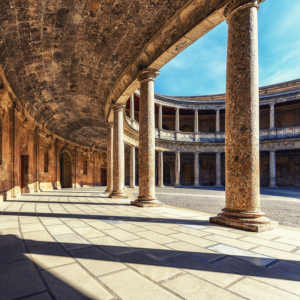
The Palace of Charles V is one of the most distinctive buildings within the Alhambra complex. Commissioned after the Christian conquest of Granada, its Renaissance design contrasts sharply with the surrounding Nasrid architecture. The building’s most striking feature is a circular courtyard enclosed within a square exterior.
This unusual combination of shapes creates a powerful architectural effect. Standing in the center of the courtyard, visitors can appreciate the symmetry of the columns and the scale of the building. Its appearance also illustrates the political and cultural changes that followed the end of Nasrid rule in Granada.
The palace houses museums dedicated to the Alhambra’s history and fine arts. Museum opening arrangements can differ from those of the main monument, so allow extra time if you want to explore the collections. Even without entering the museums, the courtyard itself is worth seeing.
The Partal Palace and Gardens
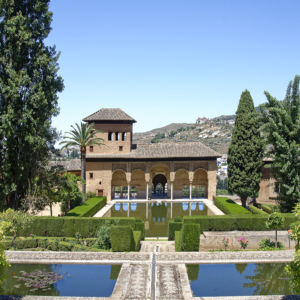
The Partal is one of the most photogenic areas of the Alhambra, yet it can receive less attention than the Nasrid Palaces or Generalife. Its elegant portico, reflecting pool and surrounding gardens create a beautiful composition, particularly when the light is soft. The area provides another opportunity to appreciate the importance of water and landscape in Nasrid architecture.
The Partal also helps connect the main monuments with the wider history of the royal city. As you walk through this section, you encounter garden spaces, architectural remains and views that reveal how extensive the Alhambra once was. It is a particularly pleasant place to slow down after the busier palace interiors.
The Medina, Gates and Historic Pathways
The Alhambra was once a functioning royal city rather than an isolated collection of monuments. Beyond the famous palaces, its historic streets, gates and archaeological remains offer clues about everyday life inside the fortified complex. Administrative buildings, workshops, residences and service areas once supported the royal court.
Important gateways include the Gate of Justice, one of the Alhambra’s best-known historic entrances. Its monumental appearance reflects the defensive and ceremonial importance of entering the complex. Walking between the principal monuments also reveals how carefully the site was positioned within the surrounding landscape.
These lesser-known areas are worth exploring if you have sufficient time. They help place the famous palaces within a broader historical setting and provide quieter moments away from the busiest visitor routes.
Alhambra tickets & tours
Alhambra Tickets: Which Ticket Should You Choose?
For a first visit, a general admission ticket including the Nasrid Palaces is usually the best choice. It allows you to explore the principal historic areas and experience the architectural highlights for which the Alhambra is famous. However, several admission options are available, including gardens-only tickets, evening visits and guided tours.
Choosing carefully matters because not every ticket includes the Nasrid Palaces. Some visitors book a lower-priced option without realizing that it excludes the most famous palace interiors. Before making a reservation, always check the exact monuments included, the visiting date and the designated Nasrid Palaces entry time.
Alhambra General Admission
General admission is the most comprehensive standard option and the one I would recommend to visitors seeing the Alhambra for the first time. It provides access to the principal historic areas, including the Nasrid Palaces, Alcazaba, Generalife and Partal. The ticket is valid for a particular date, with a separate designated time for entering the Nasrid Palaces.
One advantage of general admission is that you can arrange much of your route around the palace time slot. The other principal areas can be visited during their regular opening hours, subject to the ticket conditions. This gives you some flexibility, although the distance between the different areas still needs to be considered.
Gardens, Generalife and Alcazaba Tickets
A gardens ticket is a less expensive alternative for visitors who are particularly interested in outdoor spaces, scenery and the Generalife. It also provides access to the Alcazaba and other specified areas. However, it does not include the Nasrid Palaces, which are the main highlight for many first-time visitors.
This ticket can be a sensible option if general admission is sold out or if you have already visited the Nasrid Palaces on a previous trip. It is also attractive for travelers who prefer spending more time outside. Nevertheless, it should not be mistaken for a complete Alhambra visit.
Night Visits to the Alhambra
Evening visits offer a very different atmosphere from daytime admission. Illuminated architectural details, darker courtyards and selected sections of the complex create a more intimate experience. However, a night ticket generally covers a particular area rather than the entire Alhambra.
The Nasrid Palaces night visit is especially appealing for visitors interested in architecture and atmosphere. Garden night visits are offered during specific seasonal periods and follow their own schedules. If you want to see all the principal monuments, a regular general admission ticket is usually more suitable.
Are Guided Alhambra Tours Worth It?
A guided Alhambra tour can be worthwhile if you want to understand the symbolism, architecture and history rather than simply admire the buildings. A knowledgeable guide can explain how the Nasrid court functioned, why particular decorative elements were used and how the complex evolved after the Christian conquest. This context can make the visit considerably more meaningful.
Guided tours are also helpful for visitors who prefer a structured route. However, always check the exact inclusions before booking, particularly whether the Nasrid Palaces are included and whether admission tickets are part of the price. A guided tour without access to the Nasrid Palaces is not equivalent to a full guided Alhambra visit.
How Far in Advance Should You Book Alhambra Tickets?
Book as soon as your Granada travel dates are reasonably certain, especially for spring, Easter, summer holidays and popular weekends. The Alhambra has controlled visitor capacity, and desirable Nasrid Palaces time slots may disappear well before the visit date. There is no universal number of days in advance that guarantees availability.
If you are planning a wider Andalusia itinerary, consider securing your Alhambra admission before finalizing less time-sensitive activities. It is often easier to rearrange sightseeing in Granada than to find another suitable palace ticket. Check the booking details carefully, as changes and cancellations may be restricted.
What If Alhambra Tickets Are Sold Out?
If general admission is sold out, start by checking alternative dates, time slots and admission categories. You can also compare guided tours and combined experiences that include entrance tickets. However, availability is not guaranteed, and you should always verify whether the Nasrid Palaces are included.
A gardens-only ticket can still provide an enjoyable visit, particularly if you are interested in the Generalife and Alcazaba. Nevertheless, it is not a full replacement for general admission. If the Nasrid Palaces are your main priority, it may be worth adjusting your Granada itinerary to secure a suitable ticket.
Do You Need a Passport or ID?
Yes, Alhambra admission is personalized, and visitors must carry the required original identity document or passport. Staff may check the details against the booking, so enter names carefully when purchasing tickets. Every visitor, including children, needs the appropriate ticket or admission entitlement.
For international visitors, bringing the passport used during booking is the simplest approach. Do not assume that a photograph of your passport on your phone will be accepted as a substitute for the original. Keep your admission ticket accessible throughout the visit, as checks can occur at different monument entrances.
Alhambra Opening Hours
The Alhambra is generally open daily during its regular daytime seasons, except for its annual closure dates. Opening hours are longer between April and mid-October and shorter during the rest of the year. Night visits operate on separate schedules and are not available every evening.
Daytime Opening Hours
Alhambra Opening Hours
Opening hours can occasionally be affected by special circumstances or changes to visitor arrangements. It is therefore sensible to check the current schedule when choosing your admission date, especially around holidays.
Alhambra Night Visit Hours
During the longer season, the Nasrid Palaces night visit generally operates from 10:00 PM to 11:30 PM on selected evenings. In the shorter season, evening admission is usually scheduled from 8:00 PM to 9:30 PM on Fridays and Saturdays. Garden night visits follow more limited seasonal schedules.
A night visit is not simply an opportunity to remain inside after a daytime ticket expires. It requires an appropriate evening admission product. If you want both the complete daytime experience and the atmosphere of the illuminated palaces, plan them as separate visits or choose a suitable combined experience.
Alhambra tickets & tours
Best Time to Visit the Alhambra
The best time to visit the Alhambra is generally early in the morning, particularly during the warmer months. Temperatures are usually more comfortable, the outdoor areas can feel less tiring, and the light is often attractive for photography. Later afternoon can also be excellent, especially when the sun begins to illuminate the walls and surrounding hills at a lower angle.
However, the best time depends on the season, your ticket’s Nasrid Palaces entry slot and how much time you want to spend exploring. Because some areas are indoors and others are exposed, weather conditions affect different parts of the visit in different ways.
Visiting the Alhambra in Spring
Spring is one of the most appealing seasons for visiting the Alhambra. The Generalife gardens become particularly attractive as flowers and vegetation develop, while temperatures are generally comfortable for walking. The combination of greenery, fountains and historic architecture creates a beautiful atmosphere.
However, spring is also a popular travel period in Granada. Easter holidays and weekends can be especially busy, so advance booking is important. If possible, choose an early morning visit to enjoy the outdoor areas before the busiest part of the day.
Visiting the Alhambra in Summer
Summer brings long opening hours and bright skies, but Granada can become extremely hot. Temperatures frequently rise above 35°C during heatwaves, making exposed areas such as the Alcazaba particularly demanding. Early morning is therefore the most comfortable choice for many visitors.
Carry drinking water, wear sun protection and avoid rushing between monuments. The Nasrid Palaces provide some sheltered spaces, but much of the complex remains outdoors. If your ticket is scheduled for the afternoon, allow extra time for breaks and consider exploring the most exposed areas when temperatures begin to fall.
Visiting the Alhambra in Autumn
Autumn offers an excellent balance between comfortable sightseeing weather and attractive scenery. September can still be warm, but temperatures generally become more pleasant as the season progresses. Changing foliage and softer light make the gardens and surrounding landscape especially appealing.
The Alhambra remains popular during autumn, particularly in September and October. Booking in advance is still advisable, especially if you want a specific Nasrid Palaces entry time. Later autumn can be a particularly enjoyable period for visitors who prefer walking without intense summer heat.
Visiting the Alhambra in Winter
Winter is generally quieter outside major holiday periods, and the snow-covered Sierra Nevada can provide a spectacular backdrop. Granada’s mornings can be cold, especially in shaded or exposed areas, so dressing in layers is important. Daylight hours are shorter, which makes planning your visit more important.
Although the gardens may be less colorful than in spring, the architecture remains impressive throughout the year. Winter can also offer beautiful photographic conditions when the air is clear. A morning visit followed by an afternoon exploring Granada is a comfortable option for many travelers.
Morning or Afternoon: Which Is Better?
Morning is usually the better choice if you want cooler temperatures and plenty of time to explore. Starting at opening time gives you a useful margin before the busiest part of the day and allows a relaxed visit to the principal monuments. This is especially valuable if you are visiting with children or prefer not to walk in strong afternoon sunshine.
Afternoon visits can be equally rewarding in cooler seasons or when photography is a priority. The warm light on the Alhambra’s walls and the views toward Granada can be beautiful. However, a late Nasrid Palaces ticket requires careful planning because the remaining monuments still close at their scheduled times.
How Long Does It Take to Visit the Alhambra?
Most visitors should allow at least three hours for the Alhambra, while four hours is a more comfortable choice for a first visit. The complex covers a large area, and the distance between the principal monuments can be greater than expected. Visitors who enjoy architecture, photography or gardens may easily spend longer.
Visiting the Alhambra in Two Hours
Two hours is a rushed visit and should only be considered if your schedule is genuinely limited. You will need to prioritize the monuments included in your ticket and minimize time spent in secondary areas. The Nasrid Palaces are the obvious priority for most first-time visitors, but their fixed entry time may make a short visit difficult to organize.
If you only have two hours, study the site layout beforehand and choose an entrance that suits your route. Avoid scheduling a meal, museum visit or lengthy photography session during this period. The experience can still be memorable, but you will miss much of what makes the Alhambra special.
Visiting the Alhambra in Three Hours
Three hours is a realistic minimum for seeing the principal areas at a fairly efficient pace. You can visit the Nasrid Palaces, Alcazaba and Generalife, although you will need to manage the distances between them. Short stops at the Palace of Charles V and Partal may also be possible, depending on your route.
This duration works best for visitors who are comfortable walking and have planned around their palace entry time. It leaves relatively little room for unexpected delays or extended breaks. If you prefer to appreciate architectural details, a longer visit will be more satisfying.
Visiting the Alhambra in Four to Five Hours
Four to five hours provides a much better balance between sightseeing and relaxation. You can spend more time examining the Nasrid Palaces, enjoy the Alcazaba viewpoints, explore the Generalife gardens and pause at the Partal. There is also more flexibility for photographs and short rests.
This is the duration I would recommend to visitors who want a genuinely comprehensive experience. You are less likely to feel rushed, and you can adjust your pace when an area is particularly interesting. During summer, remember that a longer visit also means more exposure to heat, so plan appropriate breaks.
How to Plan Your Alhambra Walking Route
The most important rule when planning an Alhambra route is to organize everything around your Nasrid Palaces entry time. The palaces have a fixed admission slot, whereas the other principal areas offer more flexibility within the site’s opening hours. There is no single ideal route for every visitor because ticket times, walking ability and interests differ.
Route 1: Nasrid Palaces First
This is an excellent option if your Nasrid Palaces admission is shortly after the complex opens. Arrive with enough time to reach the palace entrance and complete any checks. After exploring the palaces, continue toward the Partal and the Palace of Charles V before visiting the Alcazaba and Generalife in an order that suits your location and energy.
The advantage of this route is that the strictest part of your schedule is completed early. You can then explore the remaining areas without worrying about missing your palace slot. It is particularly suitable for visitors who want a relaxed experience after the main highlight.
Route 2: Generalife First
If your Nasrid Palaces time slot is later in the morning or afternoon, beginning at the Generalife can work well. Explore the palace gardens, water features and viewpoints before walking toward the central Alhambra monuments. You can then visit other areas as time permits, keeping a generous margin before your palace admission.
The main risk is underestimating the walking distance between the Generalife and the Nasrid Palaces. Do not wait until the last moment to leave the gardens. A route that looks short on a map may take longer because of slopes, crowds and stops along the way.
Route 3: A Relaxed Five-Hour Visit
For a more leisurely visit, divide your time between the principal monuments and the quieter connecting spaces. Spend sufficient time in the Nasrid Palaces, visit the Alcazaba’s viewpoints, explore the Palace of Charles V and its surroundings, then enjoy the Partal and Generalife without rushing. The exact sequence should still follow your timed admission.
A longer visit also allows you to appreciate the contrast between the different architectural periods. Instead of treating the Alhambra as a checklist of famous sights, you can understand how the fortress, royal residences and gardens fit together. This approach is especially rewarding for history and architecture enthusiasts.
Alhambra tickets & tours
How to Get to the Alhambra in Granada
The Alhambra stands on Sabika Hill, above Granada’s historic center. Although it is close to the city geographically, reaching the entrance involves a substantial climb if you travel on foot. You can also use public transport, take a taxi or drive to the designated parking area.
For most visitors staying in central Granada, the best choice is either walking uphill through the historic surroundings or taking a bus or taxi to conserve energy for the monument itself. Remember that exploring the Alhambra already involves several hours of walking, so your transport choice can affect how comfortable the rest of the day feels.
Walking to the Alhambra from Granada
Walking from Plaza Nueva through the Cuesta de Gomérez is one of the most atmospheric ways to approach the Alhambra. The route passes through a historic gateway and continues uphill through a wooded area, creating a gradual transition from the busy city to the monumental complex. Depending on your pace and exact destination, the walk commonly takes around 20–30 minutes or longer.
The main disadvantage is the climb. Parts of the route are steep, and walking uphill in Granada’s summer heat can be tiring before your visit has even begun. If you enjoy walking and the weather is comfortable, however, this approach provides a memorable introduction to the setting.
Getting to the Alhambra by Bus
Granada’s small city buses provide a convenient alternative to walking uphill. Routes serving the Alhambra area include the C30, although route arrangements and stopping points can change. Buses are particularly useful for visitors staying near the city center who want to save their energy for the extensive walking inside the monument.
When choosing a stop, pay attention to the location of the entrance or monument you intend to visit first. The Alhambra covers a large area, and getting off near one part of the complex does not necessarily place you next to the Nasrid Palaces. Allow extra time for walking between the stop and your designated entry point.
Getting to the Alhambra by Taxi
A taxi is one of the simplest options if you are traveling with luggage, visiting with older family members or trying to reach an early admission slot. Taxis can take you uphill from central Granada, avoiding the steepest part of the approach. The journey is generally short, although traffic and the precise drop-off point affect the travel time.
Ask the driver to take you to the appropriate Alhambra access area, especially if you have a timed Nasrid Palaces ticket. A taxi can also be useful after your visit, when you may be tired from walking. However, availability can vary during busy periods, so do not rely on finding one immediately at the last minute.
Driving to the Alhambra and Parking
Visitors arriving by car should follow the designated access roads to the Alhambra parking facilities rather than attempting to drive through Granada’s restricted historic streets. The city center contains traffic restrictions, narrow roads and routes that can be confusing for unfamiliar drivers. Navigation systems may not always account for local access rules.
Parking is available near the main visitor access area, but it is paid and can become busy during popular periods. Arrive early enough to park, walk to the correct entrance and complete any admission checks. If you are staying in central Granada, public transport or a taxi may be easier than moving your car for a single attraction.
Which Alhambra Entrance Should You Use?
The most suitable entrance depends on where you are coming from and which monument you plan to visit first. The main visitor access area is convenient for the Generalife and ticketing facilities, while historic approaches from the city bring visitors toward other parts of the complex. Not every gate serves the same purpose, and access arrangements can change.
Main Entrance and Access Pavilion
The main visitor access area is a practical starting point for people arriving by car, bus or taxi. It is located toward the Generalife side of the complex and provides access to visitor facilities. This is a sensible option when you want to begin with the gardens or need assistance with admission arrangements.
However, visitors with an early Nasrid Palaces time slot should account for the walk from this area to the palace entrance. Arriving at the Alhambra does not mean you are already at the Nasrid Palaces. Check the route before your visit to avoid unnecessary stress.
Gate of Justice and Historic Access
The Gate of Justice, or Puerta de la Justicia, is one of the Alhambra’s most impressive historic gateways. Approaching from the city gives visitors an opportunity to appreciate the fortress walls and the monument’s defensive setting. The gate is also an important architectural landmark in its own right.
Access through the surrounding historic routes may be useful depending on your ticket and planned itinerary. Nevertheless, the gate should not automatically be treated as the correct entrance for every visitor. Consider your walking ability and the location of your first monument before choosing your approach.
Visiting the Alhambra with Children
The Alhambra can be a wonderful experience for families, especially children who enjoy castles, towers, gardens and exploring historic places. The Alcazaba feels like a real fortress, while the Generalife offers fountains, pathways and outdoor spaces that can make the visit more varied. The challenge is maintaining children’s interest during a long sightseeing day.
For younger children, three hours may already be a substantial outing. Plan regular pauses and explain a few interesting features rather than trying to describe every historical detail. The reflecting pools, towers and decorative ceilings often capture attention more successfully than lengthy explanations about dynastic history.
Are Strollers Allowed Inside the Alhambra?
Pushchairs are restricted in the main monument areas, including the Nasrid Palaces, Alcazaba and Generalife Palace. Baby carriers may be available for families, and pushchairs must be left in designated storage areas where required. Families with babies or toddlers should therefore plan ahead rather than assuming they can use a stroller throughout the visit.
The uneven surfaces, steps and slopes also make the complex less suitable for unrestricted stroller use. A comfortable baby carrier may be more practical, provided the adult carrying the child can manage the walking distance. If you are visiting during summer, pay particular attention to shade, hydration and the temperature.
Do Children Need Alhambra Tickets?
Yes, children need their own admission entitlement, even when they qualify for free entry. Children under 12 generally receive free admission, but a ticket must still be reserved for them. Do not arrive with only adult tickets and assume young children can enter automatically.
For families, it is especially important to check that every member of the group has the correct booking and that the Nasrid Palaces time slot works for everyone. A midday visit during extreme summer heat may be less comfortable for young children than an early morning booking.
Alhambra tickets & tours
Visiting the Alhambra with Seniors
The Alhambra can be enjoyable for older visitors, but the physical demands should not be underestimated. The complex covers a large area, and exploring it involves considerable walking, uneven stone surfaces, slopes and steps. Some areas offer places to rest, while others require longer stretches of standing or walking.
A slower itinerary is usually more rewarding than trying to see every monument in a short period. Four or five hours may be appropriate if you include regular breaks, although the best duration depends on individual stamina. Taking a bus or taxi uphill can help conserve energy before the visit begins.
Is the Alhambra Wheelchair Accessible?
Accessibility varies considerably between different parts of the Alhambra. Some routes and spaces are more manageable than others, while historic stairs, narrow passages and uneven surfaces can create substantial barriers. The age and protected status of the monument mean that not every architectural obstacle can be removed.
Visitors using wheelchairs or mobility aids should investigate accessibility arrangements before booking. It is particularly important to check which areas can be reached, whether adapted routes are available and where assistance can be requested. Do not assume that the standard walking itinerary will be suitable without modifications.
Practical Tips for Visitors with Limited Mobility
Choose a route that prioritizes the monuments you most want to see and avoids unnecessary backtracking. If the Nasrid Palaces are your main interest, arrange your arrival so you have sufficient time and energy for them. Consider using a taxi to reach the site rather than walking uphill from the city.
Comfortable, supportive shoes are important even for visitors without mobility limitations. In warmer months, carrying water and taking breaks in shaded areas can make a considerable difference. A guided tour may be helpful, but only if the experience can accommodate your specific mobility requirements.
Alhambra for Photography Lovers
The Alhambra is one of the most photogenic landmarks in Andalusia, offering an exceptional combination of architecture, gardens, mountain scenery and historic city views. Its decorative interiors reward close attention, while the Alcazaba and surrounding viewpoints provide opportunities for wider compositions. Light changes considerably throughout the day, so photographers can find very different atmospheres depending on their visiting time.
Best Places to Take Photos Inside the Alhambra
The Court of the Myrtles is particularly beautiful when the reflecting pool is calm. Its symmetry creates a strong composition, while the surrounding architecture provides intricate details for closer photographs. The Palace of the Lions is another major highlight, especially for images emphasizing the marble columns and decorative arches.
Outside the palaces, the Partal offers one of the most elegant combinations of water, architecture and greenery. The Alcazaba provides wider views of Granada and the surrounding mountains. In the Generalife, fountains, pathways and garden perspectives offer a softer, more natural contrast to the stone architecture.
Can You Use a Tripod or Flash?
Ordinary personal photography is generally permitted in the Alhambra, but flash, tripods and other stabilizing equipment are restricted. Selfie sticks are also prohibited in certain areas, including the Nasrid Palaces. Professional filming or photographic sessions may require advance authorization.
For most visitors, a smartphone or handheld camera is the most practical choice. The Nasrid Palaces can be relatively dim in places, so use available light and avoid obstructing other visitors while taking photographs. Respect barriers and staff instructions, particularly around delicate historic decoration.
Best Views of the Alhambra from Granada
One of the most famous viewpoints is the Mirador de San Nicolás in the Albaicín neighborhood. From here, the Alhambra stretches across the opposite hillside with the Sierra Nevada mountains behind it. The view is especially memorable in the late afternoon and around sunset, when the palace walls can take on warm golden tones.
Other viewpoints around the Albaicín and Sacromonte offer alternative perspectives, sometimes with fewer visitors. Exploring the narrow streets between these locations can be as enjoyable as reaching the viewpoints themselves. If photography is a major priority, consider visiting a viewpoint on a separate evening rather than trying to combine it with a long Alhambra tour.
What to Wear and Bring to the Alhambra
Comfortable walking shoes are the most important item to bring to the Alhambra. You will encounter cobbled paths, stone floors, slopes and steps, so footwear with good support and grip is preferable to sandals with thin soles. Clothing should be suitable for the weather and allow comfortable movement over several hours.
During summer, light clothing, sun protection and drinking water are essential. In winter, mornings can be cold, particularly in exposed areas, so layers are useful. Granada’s temperature can change significantly between sunshine and shade, and the weather at the Alhambra may feel different from the city streets below.
Can You Bring a Backpack?
Small backpacks are permitted, but bags larger than approximately 40 × 40 cm are restricted in certain monument areas. Storage facilities may be available at designated locations, subject to capacity, and oversized bags should not be brought into restricted spaces. Travelers carrying luggage should arrange storage before their visit.
It is better to carry a compact day bag containing only essentials. A large backpack can be inconvenient in narrow palace spaces and may create problems at security checks. Keep your passport or ID, admission ticket and phone somewhere easily accessible.
Are Food and Drinks Allowed?
Visitors should bring enough drinking water, especially during hot weather. Eating is restricted in monument areas, and food should only be consumed where permitted. The Alhambra is a protected historic site, so visitors should avoid leaving litter or treating gardens and courtyards as picnic areas.
If you expect to spend four or five hours exploring, plan your meals around the visit. Having breakfast beforehand or arranging lunch afterward is usually more convenient than interrupting your route. Consider the availability of refreshments before entering the main monument areas.
Are There Toilets at the Alhambra?
Yes, toilet facilities are available at designated points within the wider Alhambra complex. However, they are not necessarily close to every monument, and the distance between facilities can be considerable. It is sensible to use a restroom before entering the Nasrid Palaces or beginning a longer section of the route.
Visitors traveling with children or anyone who needs frequent restroom access should identify convenient facilities before starting their visit. Allowing time for these stops is particularly important when you have a fixed palace admission slot. Do not assume you can leave a controlled monument area and re-enter it whenever you wish.
Alhambra tickets & tours
Where to Stay Near the Alhambra
The best place to stay for visiting the Alhambra depends on whether you prefer convenience, atmosphere, nightlife or easy transport. Granada is relatively compact, but its historic neighborhoods are spread across hills and steep streets. A hotel that looks close to the Alhambra on a map may still involve a demanding walk.
For most first-time visitors, central Granada offers the best overall balance. Staying near Plaza Nueva, the Cathedral or the lower Albaicín gives you access to restaurants, historic sights and transport connections. If you prefer quieter surroundings or memorable views, accommodation closer to the Alhambra or higher in the Albaicín may be more appealing.
Plaza Nueva and the Historic Center
Plaza Nueva is one of the most convenient areas for first-time visitors. It offers easy access to restaurants, cafés, historic streets and transport connections, while the walking route toward the Alhambra begins nearby. The location is particularly useful if you want to explore Granada on foot.
Accommodation ranges from small guesthouses to comfortable hotels in historic buildings. The area can be lively, especially in the evening, so travelers who prefer complete silence may want to choose a quieter side street. Overall, it is one of the best bases for a short Granada stay.
Albaicín
The Albaicín is ideal for travelers who value atmosphere, traditional architecture and beautiful views. Its whitewashed houses, narrow lanes and historic character make it one of Granada’s most memorable neighborhoods. Some accommodations offer terraces overlooking the Alhambra, creating a particularly special setting.
However, the neighborhood’s steep streets and uneven surfaces can be challenging with luggage or mobility limitations. Taxi access may also be restricted in certain locations. Before booking, consider how you will reach the accommodation and whether the walking conditions suit your needs.
Cathedral and Central Granada
The area around Granada Cathedral offers a wide selection of hotels, shops, restaurants and cafés. It is a practical choice for travelers who want easy access to the city’s main attractions without staying on a steep hillside. Public transport connections also make it convenient for reaching the Alhambra.
This part of Granada is especially suitable for visitors staying several nights. You can explore different neighborhoods during the day and return to a central location in the evening. The atmosphere is generally more urban than in the Albaicín, but the convenience is a major advantage.
Staying on Alhambra Hill
Accommodation close to the Alhambra can provide a peaceful setting and convenient access to the monument. Some properties occupy historic buildings or offer attractive gardens and views. Staying here can be particularly appealing if visiting the Alhambra is the main purpose of your trip.
The disadvantage is that you may have fewer restaurants and shops within an easy walk. Reaching central Granada can also involve a steep descent or transport. For visitors who want to explore the city extensively, a more central location may be preferable.
What to See Near the Alhambra
Granada is one of Andalusia’s most rewarding cities for travelers interested in history, architecture and culture. The Alhambra is the main attraction, but the surrounding neighborhoods contain viewpoints, churches, traditional houses and streets that reflect the city’s layered past. If possible, allow at least one additional day to explore beyond the monument.
Albaicín: Granada’s Historic Moorish Quarter
The Albaicín is one of Granada’s most atmospheric neighborhoods, with whitewashed houses, narrow lanes and spectacular views toward the Alhambra. Its street pattern preserves much of the character of the city’s medieval Islamic past. Walking here feels very different from exploring the formal courtyards and monumental architecture of the palace complex.
The neighborhood is best enjoyed slowly, allowing time to discover small squares, traditional houses and unexpected viewpoints. Its steep streets can be tiring, particularly during summer, so comfortable shoes are important. Late afternoon is a beautiful time to visit, especially if you plan to watch the sunset from one of the viewpoints.
Mirador de San Nicolás
The Mirador de San Nicolás is the classic viewpoint for photographing the Alhambra from across the valley. Its elevated position provides an excellent view of the fortress, palaces and surrounding landscape. On clear days, the Sierra Nevada mountains create a dramatic background.
The viewpoint is especially popular around sunset, so it can become crowded. If you prefer a quieter experience, arrive earlier or explore nearby streets for alternative perspectives. The surrounding Albaicín makes the visit worthwhile even when the main viewpoint is busy.
Sacromonte: Caves and Flamenco Traditions
Sacromonte is known for its hillside cave dwellings, distinctive landscape and long association with Granada’s flamenco traditions. The neighborhood offers a different perspective on the city, with narrow paths and viewpoints looking toward the Alhambra and surrounding hills. Its atmosphere contrasts with the more formal architecture of the palace complex.
Visitors interested in local culture may enjoy exploring the area during daylight and attending a flamenco performance in the evening. As with the Albaicín, the steep streets require some physical effort. Allow enough time to appreciate the neighborhood rather than treating it as a quick photo stop.
Granada Cathedral and the Royal Chapel
Granada Cathedral represents a major chapter in the city’s history following the Christian conquest. Its grand Renaissance architecture contrasts with the Islamic decorative traditions of the Alhambra. Visiting both monuments provides a fuller understanding of Granada’s transformation over the centuries.
Nearby, the Royal Chapel is closely associated with the Catholic Monarchs, Ferdinand and Isabella. Its historical significance makes it particularly interesting for visitors who want to connect the Alhambra’s final Nasrid period with the political changes that followed. Both attractions fit naturally into a day exploring central Granada.
Carrera del Darro and Paseo de los Tristes
The Carrera del Darro is one of Granada’s most picturesque streets, following the river beneath the Alhambra hillside. Historic buildings, small bridges and views of the fortress create a beautiful setting for a leisurely walk. The route leads toward the Paseo de los Tristes, a lively area with cafés and impressive views upward toward the monument.
This is an excellent place to visit after exploring the Alhambra, particularly if you still have some energy for walking. The contrast between the monumental hilltop complex and the intimate riverside streets helps reveal how closely the Alhambra is connected to the rest of Granada.
Alhambra tickets & tours
A Brief History of the Alhambra
The Alhambra’s history is closely connected to the Nasrid dynasty, which ruled the Emirate of Granada during the final centuries of Muslim political power in the Iberian Peninsula. Although fortifications existed on the hill before the Nasrid period, the complex developed into a remarkable royal residence and fortified city during the 13th and 14th centuries.
The name Alhambra is commonly associated with the Arabic expression referring to the red fortress, reflecting the reddish appearance of its walls. Over time, the site became much more than a defensive stronghold. It developed into a sophisticated political and cultural center containing palaces, administrative spaces, gardens and infrastructure.
The Nasrid Dynasty and the Golden Age of the Alhambra
Muhammad I, founder of the Nasrid dynasty, established the Alhambra as a royal center during the 13th century. Later rulers expanded and refined the complex, with major architectural achievements associated with Yusuf I and Muhammad V in the 14th century. Their building programs helped create many of the palace spaces visitors admire today.
The Nasrid court developed a distinctive architectural language combining geometry, inscriptions, ornamental plasterwork and carefully designed water features. These elements were not merely decorative. They also communicated ideas about royal authority, religion, beauty and the relationship between architecture and nature.
The Christian Conquest of Granada in 1492
In 1492, Granada surrendered to the Catholic Monarchs, Ferdinand and Isabella, bringing the last Muslim-ruled kingdom in the Iberian Peninsula to an end. The Alhambra subsequently became part of the Christian monarchy’s royal property. The conquest marked a major political and cultural turning point in Spanish history.
The site did not remain unchanged after 1492. New uses, alterations and architectural projects reflected the priorities of successive rulers. The Palace of Charles V is one of the most visible examples of the Renaissance architectural ambitions introduced into the former Nasrid royal complex.
From Royal Residence to World Heritage Site
Over the centuries, parts of the Alhambra experienced periods of neglect, alteration and restoration. Its artistic and historical importance attracted growing attention from writers, travelers and scholars, particularly during the 19th century. This renewed interest helped establish the Alhambra as one of Europe’s most celebrated historic monuments.
The Alhambra and Generalife were inscribed on the UNESCO World Heritage List in 1984, with the Albaicín added to the listing in 1994. Their recognition reflects the exceptional cultural significance of Granada’s architectural heritage. Today, conservation remains essential because the site’s delicate decorative surfaces and historic structures must be protected while accommodating large numbers of visitors.
Suggested Granada Itineraries Including the Alhambra
The Alhambra can be visited as part of a single day in Granada, but the city deserves more time if your schedule allows. Combining the monument with the Albaicín, Cathedral and historic streets creates a more complete picture of Granada. The ideal itinerary depends on your interests and whether you prefer a relaxed or intensive travel style.
One Day in Granada
Start with an early Alhambra visit, allowing approximately four hours for the principal monuments. Afterward, head into central Granada for lunch and a walk through the historic streets. In the afternoon, explore the Carrera del Darro and continue toward the Albaicín.
Finish the day at the Mirador de San Nicolás, where you can admire the Alhambra from across the valley. This itinerary covers Granada’s most recognizable highlights, but it involves considerable walking. Taking a bus or taxi for the uphill sections can help conserve energy.
Two Days in Granada
On the first day, devote the morning or afternoon to the Alhambra without trying to combine it with too many other attractions. Spend the remaining time exploring the Carrera del Darro, Paseo de los Tristes and nearby streets. This allows the monument to be the main focus of the day.
On the second day, visit Granada Cathedral and the Royal Chapel before exploring the Albaicín and Sacromonte. Enjoy the viewpoints, local cafés and neighborhood atmosphere at a slower pace. Two days provide a much better balance between major monuments and the everyday character of the city.
Three Days in Granada
With three days, you can explore the Alhambra thoroughly and still have time for Granada’s historic neighborhoods, museums and food culture. The extra day allows you to visit lesser-known attractions or enjoy a more relaxed itinerary. You can also consider excursions into the surrounding region, depending on the season.
Granada is well positioned for exploring other parts of Andalusia, although longer day trips should be planned carefully. The Sierra Nevada offers mountain scenery, while towns and landscapes elsewhere in the province provide a different perspective on southern Spain. If you have already visited the major city attractions, an additional day can be especially rewarding.
Alhambra tickets & tours
Frequently Asked Questions About the Alhambra
Do You Need to Book Alhambra Tickets in Advance?
Yes, advance booking is strongly recommended because the Alhambra has controlled admission capacity and popular dates can sell out. This is particularly important if you want to visit the Nasrid Palaces. Booking early also gives you more choice over the palace entry time, which determines how you organize the rest of your visit.
Can You Visit the Alhambra Without a Ticket?
You can explore certain surrounding paths and publicly accessible areas without purchasing full monument admission, but the principal ticketed monuments require the appropriate entry ticket. These include the Nasrid Palaces, Alcazaba and Generalife Palace. If you want the complete Alhambra experience, general admission is the most suitable standard option.
Can You Buy Alhambra Tickets at the Entrance?
Ticketing arrangements and remaining availability depend on the day and admission category. However, relying on purchasing a ticket upon arrival is risky because popular dates and Nasrid Palaces time slots may already be sold out. Booking in advance is the safer approach.
What Happens If You Miss Your Nasrid Palaces Time Slot?
You may lose the right to enter the Nasrid Palaces if you arrive outside the time specified on your ticket. The admission window must be respected. Other areas included in your ticket may still be accessible during their regular hours, but that does not guarantee access to the palaces later.
Can You Visit the Nasrid Palaces Without Visiting the Rest of the Alhambra?
Yes, certain admission products focus specifically on the Nasrid Palaces, particularly night visits. However, a standard daytime general admission ticket includes other major areas as well. If you are visiting Granada for the first time, seeing the Alcazaba and Generalife alongside the palaces provides a more complete experience.
Can You Visit the Alhambra Twice on the Same Ticket?
A standard ticket allows access to its included areas according to the applicable conditions, but each controlled monument area can generally be entered only once. You should not assume that you can return to the Nasrid Palaces or Alcazaba after leaving. Plan your route carefully and keep your ticket accessible throughout the visit.
Is the Alhambra Better in the Morning or Afternoon?
Morning is usually preferable in warm weather because temperatures are lower and you have more time before closing. Afternoon can offer beautiful light, particularly for outdoor photography, but a late ticket may limit the time available for other monuments. The best choice depends on the season and your Nasrid Palaces entry slot.
How Much Walking Is Involved at the Alhambra?
Expect several hours of walking across a large complex, including slopes, stone paths and steps. The exact distance depends on your entrance, route and the monuments you visit. Comfortable shoes are essential, and visitors with mobility limitations should investigate accessible routes before booking.
Is There a Dress Code for the Alhambra?
There is no general religious dress code requiring visitors to cover their shoulders or knees as they might at certain places of worship. Practical clothing and comfortable shoes are more important. Dress for the weather, and remember that parts of the site are exposed to strong sunshine or cold winds depending on the season.
Can You Bring Water into the Alhambra?
Bringing drinking water is advisable, particularly during Granada’s hot summers. Visitors should follow the monument’s rules about where food and drinks may be consumed. A reusable water bottle and a compact day bag are sensible choices for a long visit.
Is the Alhambra Suitable for Young Children?
Yes, but the visit should be adapted to their age and stamina. The fortress, gardens and fountains can be enjoyable for children, while long periods inside the palaces may require more patience. Remember that pushchairs are restricted in important monument areas and children need their own admission tickets.
Can You Visit the Alhambra in the Rain?
Yes, the Alhambra can still be visited in rainy weather, although outdoor paths and stone surfaces may become slippery. The Nasrid Palaces contain covered areas, but much of the complex is open to the elements. Wear suitable footwear and bring rain protection, particularly if you plan to explore the gardens and Alcazaba.
Is the Alhambra Open on Sundays?
Yes, the Alhambra is normally open on Sundays under its regular daytime schedule. It is also open on most public holidays, although December 25 and January 1 are annual closure dates. Check the current visiting calendar for any exceptional arrangements.
Is the Alhambra the Same as the Generalife?
No. The Generalife is a separate palace and garden area associated with the Nasrid rulers, while the Alhambra is the wider fortified royal complex. The Generalife is included in general admission, making it an essential part of a complete visit. Its gardens and water features provide a different atmosphere from the Nasrid Palaces.
Can You See the Alhambra from Granada Without Entering?
Yes. Several viewpoints in Granada offer spectacular views of the Alhambra from outside the monument. The Mirador de San Nicolás is the most famous, while other locations in the Albaicín and Sacromonte provide alternative perspectives. These viewpoints are particularly beautiful around sunset.
Is the Alhambra Worth Visiting If the Nasrid Palaces Are Sold Out?
The Alcazaba, Generalife and gardens are still worth visiting, especially if you enjoy historic architecture, landscapes and viewpoints. However, the Nasrid Palaces contain some of the Alhambra’s most extraordinary interiors. If you are traveling to Granada specifically for the Alhambra, it is worth making a serious effort to secure a ticket that includes them.
Final Tips for Visiting the Alhambra
The Alhambra is at its best when you give yourself time to appreciate both its famous monuments and its quieter corners. Book your ticket early, plan around the Nasrid Palaces time slot and allow at least three to four hours for your visit. Wear comfortable shoes, carry the required identification and remember that distances between the principal areas can be greater than expected.
Above all, try not to treat the Alhambra as a race between attractions. The reflections in the Court of the Myrtles, the carved ceilings of the Nasrid Palaces, the views from the Alcazaba and the fountains of the Generalife are experiences worth enjoying slowly. Together, they make the Alhambra one of the most memorable places to visit in Spain.